Vinyl Flooring
Click LVT: Identifying the Lock and Core Combination
A click label describes a connection, but leaves much of the vinyl construction unanswered. Learn to identify the core, mating edges and backing as one offered configuration, using locking-technology examples without treating a brand name as universal compatibility.
Quick answer
Click LVT combines a vinyl product with a mechanical connection, but the label does not identify every core, joint or backing. Record the complete configuration, including long-edge and end-joint details. Use the instructions for the exact floor; parts from different ranges cannot be assumed to fit because both are sold as click.
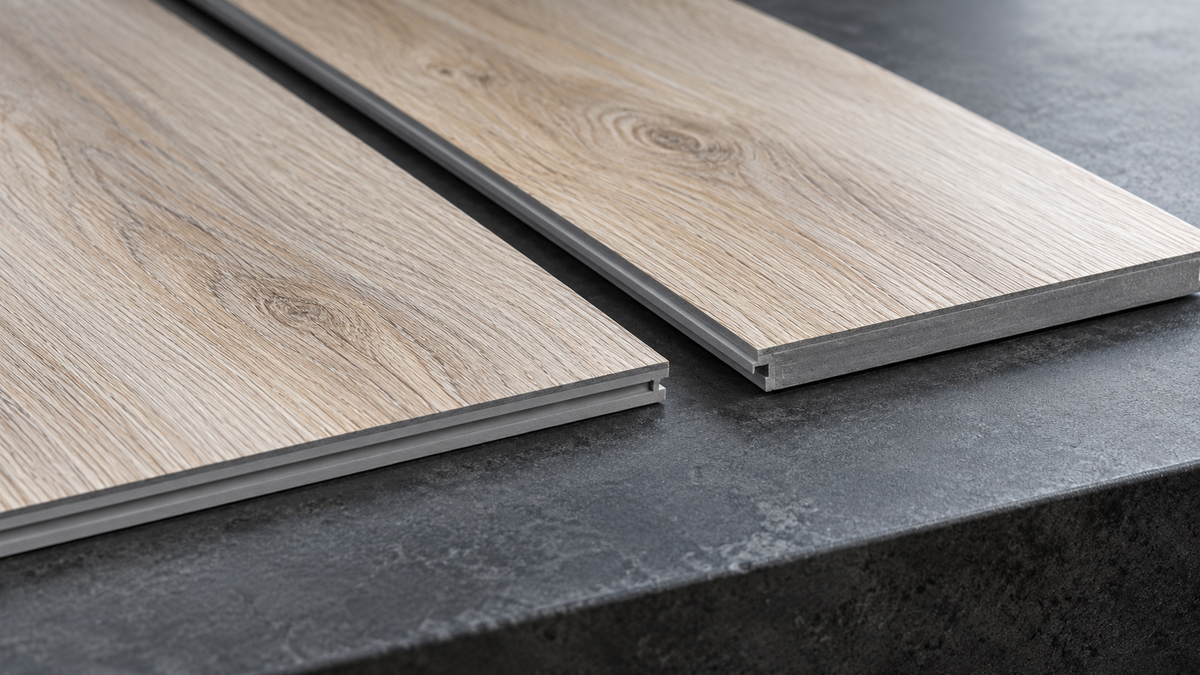
Cover: AI-generated editorial illustration of generic flooring materials or a sample layout. It is not a photograph of a named-brand product or completed project, nor a verified construction or locking profile. The in-article diagram is an original SGFloorHub schematic, not to scale.
Read the edge system as part of the product
A mechanical connection is a shaped edge arrangement. Its identification matters at both the long side and the end joint. A sales description such as “easy click” does not provide the profile, assembly method or permitted layout.
Välinge’s 2G resource describes an angling locking technology. Other technologies have different arrangements. That example explains a named connection; it does not establish that every floor carrying a similar term has the same geometry or can connect to another product.
Request the floor manufacturer’s diagram and collection-specific instructions. The technology provider’s name can help identify the connection, but it is not a replacement for the instructions applying to the actual board and material.

Four fields that belong on one configuration sheet
| Field | Record | Why it must stay connected |
|---|---|---|
| Core | Manufacturer’s named core and construction. | The lock is formed in a specific product. |
| Edges | Long-side and end-joint description or diagram. | The two connections can work differently. |
| Face | Wear surface, decor and treatment. | A matching appearance is not matching construction. |
| Underside | Attached pad or specified backing. | Extra supporting layers require product approval. |
The Van Gogh Rigid Core ANZ datasheet identifies a 5G Fold Down installation system for that product. Treat it as a precise configuration example, not a guarantee of compatibility with another 5G-labelled product.
This is why a specification should retain both the floor code and its supporting documents instead of reducing the order to “oak click vinyl”.

Example: an extra carton from a different range
Editorial illustration: a project needs more material and the supplier offers a visually similar carton from another collection. The existing and proposed boards both have profiled edges. Before accepting the substitution, verify the code, revision, connection and installed height. A superficial trial fit is not a manufacturer compatibility statement.
Ask whether the proposed replacement is intended to connect within the existing field or finish at a defined transition. Those are different details. Retain the written answer with the product schedule; do not hide a configuration change in a colour substitution.
Do not repeatedly assemble and dismantle a sample to infer durability. An observed joint and a performance test answer different questions. Use the relevant documentation for any claimed result.
Keep the article focused on identification
The click construction should lead to the approved installation guide, not a generic sequence copied from a video of another product. Herringbone systems, for example, can require a dedicated board arrangement; the presence of a click edge does not approve every pattern.
For Singapore procurement, confirm the actual supplied code, accessories and local support. Overseas documents are examples in this article; they do not confirm stock or project approval.
Once the configuration is established, use the existing installation-method comparison to discuss fixing choice and the movement guide to review interfaces. This article owns the link between core, lock and backing, which should remain visible whenever the product is changed.
Frequently asked questions
Does click LVT always have an SPC core?
No. Connection and core construction are separate fields. Verify both.
Can two floors with the same lock brand connect?
Do not assume compatibility. Confirm the exact profile, product configuration and manufacturer approval.
Can I add a soft pad beneath any click floor?
Only when the exact floor’s instructions permit that supporting arrangement.
Sources and scope
Sources checked on 14 October 2026. Manufacturer examples explain their named products and regions; they do not confirm Singapore stock or approval of your project. Labelled scenarios are editorial illustrations, not measurements or site investigations.
Continue reading
Written by SGFloorHub Editorial. Updated 14 October 2026. Editorial method · Suggest a correction
Independent editorial guidance. Check the current documents for the exact product and project.
Editorial standardsSuggest a correctionCONTINUE READING
More from this subject.

Vinyl Flooring
Large-Format LVT: Specify the Module Before the Look
Large-format describes proportion, not a performance grade. Define the actual module and review how it meets the room edges and fixed features.
Read article Large-Format LVT: Specify the Module Before the Look
Vinyl Flooring
LVT Grout Effects: Printed Lines, Bevels or Separate Strips?
A grout effect may be printed, formed at the edge or made with a separate strip. Identify the detail before choosing the tile and layout.
Read article LVT Grout Effects: Printed Lines, Bevels or Separate Strips?
Vinyl Flooring
Vinyl Sheet Roll Widths: Understanding Product Options
Roll width is a supplied-product dimension that needs a matching design and construction reference. Learn how to read a real width example, distinguish nominal format from a lay...
Read article Vinyl Sheet Roll Widths: Understanding Product Options