Vinyl Flooring
Rigid-Core Vinyl: Identifying the Actual Core System
Rigid-core is a category description, not a complete specification. Follow a practical identification route through core type, decorative face, locking system and backing, then match each offered configuration to its own documents before approving a vinyl floor.
Quick answer
Rigid-core describes a stiff supporting construction within a flooring product. It does not uniquely identify SPC, WPC, a particular locking profile or a backing. Read the category, exact core description, surface construction and installation configuration as separate fields before comparing products.
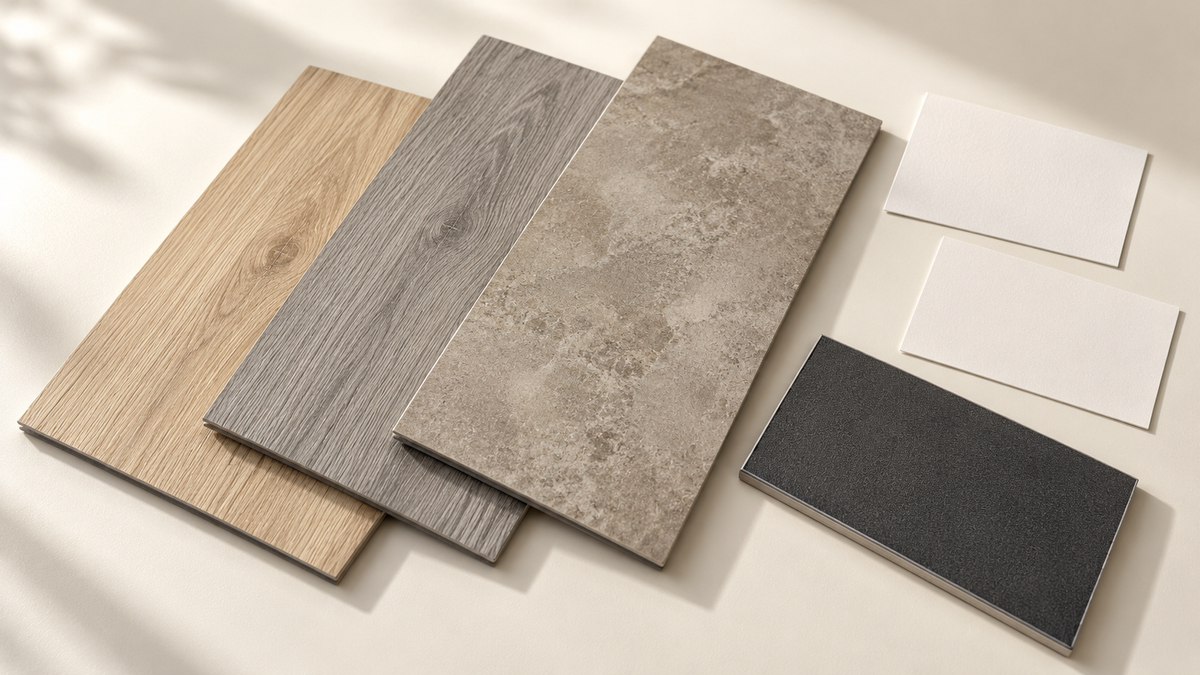
Cover: AI-generated editorial illustration of generic flooring materials or a sample layout. It is not a photograph of a named-brand product or completed project, nor a verified construction or locking profile. The in-article diagram is an original SGFloorHub schematic, not to scale.
Use a product identity tree
Start with the complete offered code. Under it, record four branches: core description, face construction, joint/fixing arrangement and underside. Each branch needs its own answer. A branded core name can sit beneath the category without becoming a generic definition for the whole market.
| Identity branch | Example of what belongs here |
|---|---|
| Core | SPC, foamed WPC or a manufacturer’s other stated construction. |
| Face | Wear layer, decor and surface-treatment specification. |
| Connection | Named locking arrangement or another permitted configuration. |
| Underside | Attached pad, specified backing or no attached layer. |
This is a classification aid, not a diagram of one actual product. COREtec’s United States tile collection distinguishes WPC, SPC and other mineral-core products within its portfolio. Shaw’s terminology separately describes solid and foamed constructions. Both demonstrate why the broader category needs a more precise product identity.

Why a colour name cannot identify the system
A collection can offer similar wood or stone visuals in more than one format. The selected decorative name may therefore need a construction suffix or separate code. If a sample card gives only “oak, rigid-core”, ask which exact configuration will appear on the carton and order.
The same concern applies to product revisions. A current web page may describe a different gauge or backing from a sample retained earlier. Match the document version to the offered product; do not choose whichever specification looks most attractive.
There is no benefit in forcing an unidentified product into the SPC branch because a hand sample feels stiff. Stiffness is an observation, not chemical identification. Use the manufacturer’s construction statement.

Example: two proposals that share the category
Editorial illustration: both proposals say “rigid-core oak”. One identifies a solid composite core with an attached pad; the other identifies a foamed construction and a different edge system. These are separate configurations. Compare the requirements of each before deciding whether the proposals answer the same brief.
Make an identity card containing the article or model number, region, core description, face fields, locking details and backing. Mark unanswered branches visibly. The card becomes the starting point for the datasheet review, rather than a second score based on sales labels.
You may then compare appearance and the product’s relevant evidence. The category itself does not establish a universal room suitability, moisture tolerance or acoustic outcome.
Keep identification separate from installation instructions
This article identifies what the product is. The exact installation guide determines how it is used. Avoid expanding a classification article into a step-by-step installation procedure, especially while the base and project conditions are unknown.
For a Singapore purchase, retain the supplied local code and supporting instructions. If an overseas example is used to explain terminology, keep that example’s region visible and obtain the document for the actual offer.
Before approval, you should be able to complete the sentence: “The specified floor is this code, with this core, this face, this connection and this underside.” If those fields cannot be filled, a broad rigid-core label is still an incomplete specification.
Frequently asked questions
Is all rigid-core vinyl SPC?
No. Identify the core construction stated for the exact product.
Does rigid-core mean a particular click lock?
No. Core construction and mechanical connection are separate specification fields.
Can I identify the core by bending a sample?
A hand sample can show stiffness, but it does not establish its chemical composition or a tested performance class.
Sources and scope
- COREtec: tile core constructions, United States
- Shaw Floors: vinyl construction terms, United States
Sources checked on 14 October 2026. Manufacturer examples explain their named products and regions; they do not confirm Singapore stock or approval of your project. Labelled scenarios are editorial illustrations, not measurements or site investigations.
Continue reading
Written by SGFloorHub Editorial. Updated 14 October 2026. Editorial method · Suggest a correction
Independent editorial guidance. Check the current documents for the exact product and project.
Editorial standardsSuggest a correctionCONTINUE READING
More from this subject.

Vinyl Flooring
Large-Format LVT: Specify the Module Before the Look
Large-format describes proportion, not a performance grade. Define the actual module and review how it meets the room edges and fixed features.
Read article Large-Format LVT: Specify the Module Before the Look
Vinyl Flooring
LVT Grout Effects: Printed Lines, Bevels or Separate Strips?
A grout effect may be printed, formed at the edge or made with a separate strip. Identify the detail before choosing the tile and layout.
Read article LVT Grout Effects: Printed Lines, Bevels or Separate Strips?
Vinyl Flooring
Vinyl Sheet Roll Widths: Understanding Product Options
Roll width is a supplied-product dimension that needs a matching design and construction reference. Learn how to read a real width example, distinguish nominal format from a lay...
Read article Vinyl Sheet Roll Widths: Understanding Product Options