Vinyl Flooring
SPC Core Composition: Reading Beyond the Product Label
SPC identifies a core construction, not a complete performance guarantee. Learn how to separate material disclosure from marketing, read a manufacturer composition example and record what remains unknown about the exact vinyl product being offered.
Quick answer
SPC commonly describes a stone/polymer composite core within a rigid vinyl product. The initials do not disclose a universal formulation or prove a level of quality. Separate core composition from the wear surface, printed design, locking profile and backing, and use disclosure for the exact product.
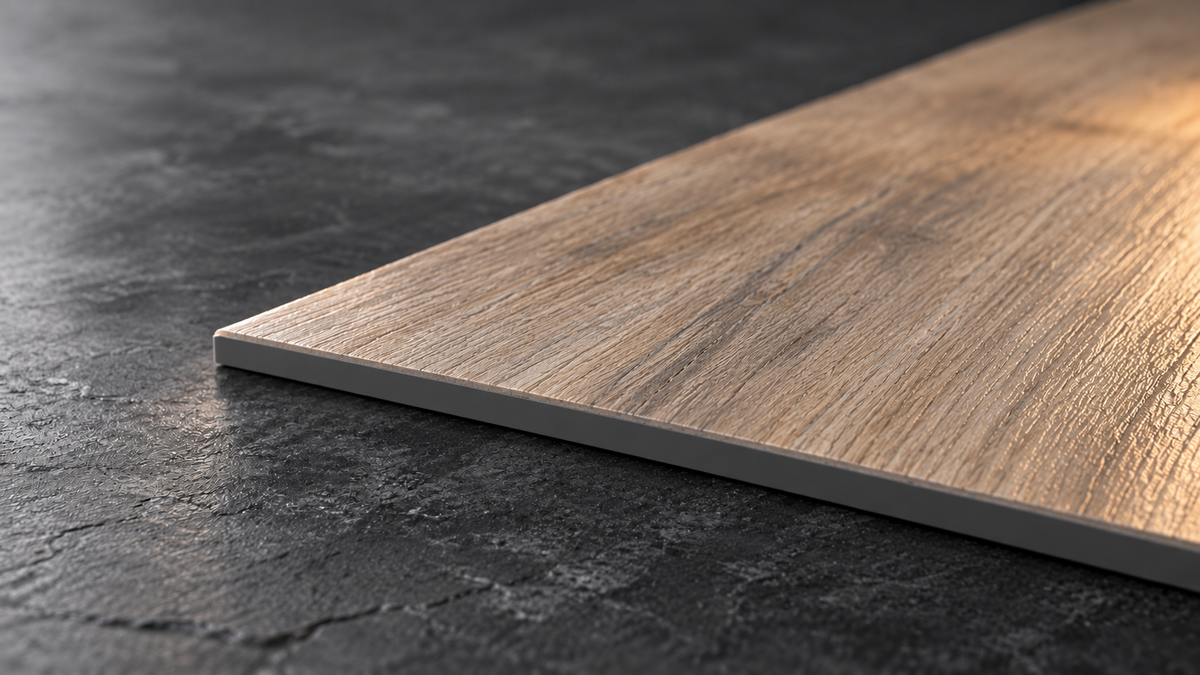
Cover: AI-generated editorial illustration of generic flooring materials or a sample layout. It is not a photograph of a named-brand product or completed project, nor a verified construction or locking profile. The in-article diagram is an original SGFloorHub schematic, not to scale.
What a manufacturer actually discloses
Flooret’s Modin construction page identifies its SPC core as limestone and PVC without wood fibre. This is a United States manufacturer example. It should not be transferred as the formula of a different brand or a private-label Singapore offer.
Composition describes what a material contains. A performance result describes how a defined sample or assembly behaved under a method. Those are connected but different kinds of evidence. A sales claim that a core has “more stone” needs a stated basis and does not, by itself, establish locking strength, indentation performance or suitability for your room.
Where percentages are published, retain their basis: core or complete product, mass or another measure, named range and document version. Do not combine values from different documents into a new formula.

Separate the material questions
| Question | Meaningful answer | Avoid assuming |
|---|---|---|
| What is the core? | Manufacturer’s named construction and material description. | That every rigid-core floor is SPC. |
| What proportion is disclosed? | Scope and basis of a published figure. | One standard limestone/PVC ratio for the market. |
| What is outside the core? | Wear surface, decor, backing and lock information. | That a core claim covers all layers. |
| What evidence addresses use? | Applicable test or intended-use documentation. | That density or mineral content predicts every result. |
A missing proprietary formulation is not proof that a product is poor. It limits the composition claim you can responsibly make. Ask for the disclosed construction and relevant product evidence instead of pretending a recipe is necessary for every purchasing decision.
Example: a claimed mineral ratio without a document
Editorial illustration: supplier A offers “70% stone SPC” without identifying whether the figure concerns the core or finished plank. Supplier B names its product and provides a construction sheet, but gives no exact recipe. The first claim sounds more numerical; the second may still provide the more traceable product identity. Neither is ready for a composition ranking until the evidence and scope are aligned.
Record the number as unverified, not as a measured fact. Request the source and keep it with the quotation if supplied. If it remains unsupported, describe the product using its verified construction rather than repeating the percentage in your specification.
Do not weigh a small sample and infer a mineral percentage. Sample size, attached backing and other layers affect weight, and that informal exercise is not a composition analysis.
What the composition guide should hand off
After identifying the core, review the exact wear-layer and overall-gauge fields separately. Then identify the locking arrangement and any attached pad. A change to either can matter even when the supplier describes the same core family.
Shaw’s vinyl terminology illustrates that manufacturer labels can describe solid and foamed core constructions differently. Preserve the supplier’s exact terminology and reconcile it with the specification instead of making the initials carry every technical conclusion.
For Singapore procurement, confirm the actual supplied code, supporting documents and responsible seller. The overseas example in this article explains material disclosure; it is not a claim of local availability or a recommendation to choose the highest advertised mineral content.
Frequently asked questions
Does a higher stone percentage mean better SPC?
A percentage alone cannot rank the complete floor. Establish its basis and compare evidence addressing the required performance.
Does SPC mean natural stone flooring?
No. It describes a composite core label, not a slab or tile of natural stone.
Must a supplier disclose its complete recipe?
Not necessarily. Ask for the construction and claims needed for the decision, and keep undisclosed details separate from verified facts.
Sources and scope
Sources checked on 14 October 2026. Manufacturer examples explain their named products and regions; they do not confirm Singapore stock or approval of your project. Labelled scenarios are editorial illustrations, not measurements or site investigations.
Continue reading
Written by SGFloorHub Editorial. Updated 14 October 2026. Editorial method · Suggest a correction
Independent editorial guidance. Check the current documents for the exact product and project.
Editorial standardsSuggest a correctionCONTINUE READING
More from this subject.

Vinyl Flooring
Large-Format LVT: Specify the Module Before the Look
Large-format describes proportion, not a performance grade. Define the actual module and review how it meets the room edges and fixed features.
Read article Large-Format LVT: Specify the Module Before the Look
Vinyl Flooring
LVT Grout Effects: Printed Lines, Bevels or Separate Strips?
A grout effect may be printed, formed at the edge or made with a separate strip. Identify the detail before choosing the tile and layout.
Read article LVT Grout Effects: Printed Lines, Bevels or Separate Strips?
Vinyl Flooring
Vinyl Sheet Roll Widths: Understanding Product Options
Roll width is a supplied-product dimension that needs a matching design and construction reference. Learn how to read a real width example, distinguish nominal format from a lay...
Read article Vinyl Sheet Roll Widths: Understanding Product Options