Vinyl Flooring
Loose-Lay LVT: What Actually Holds It in Position
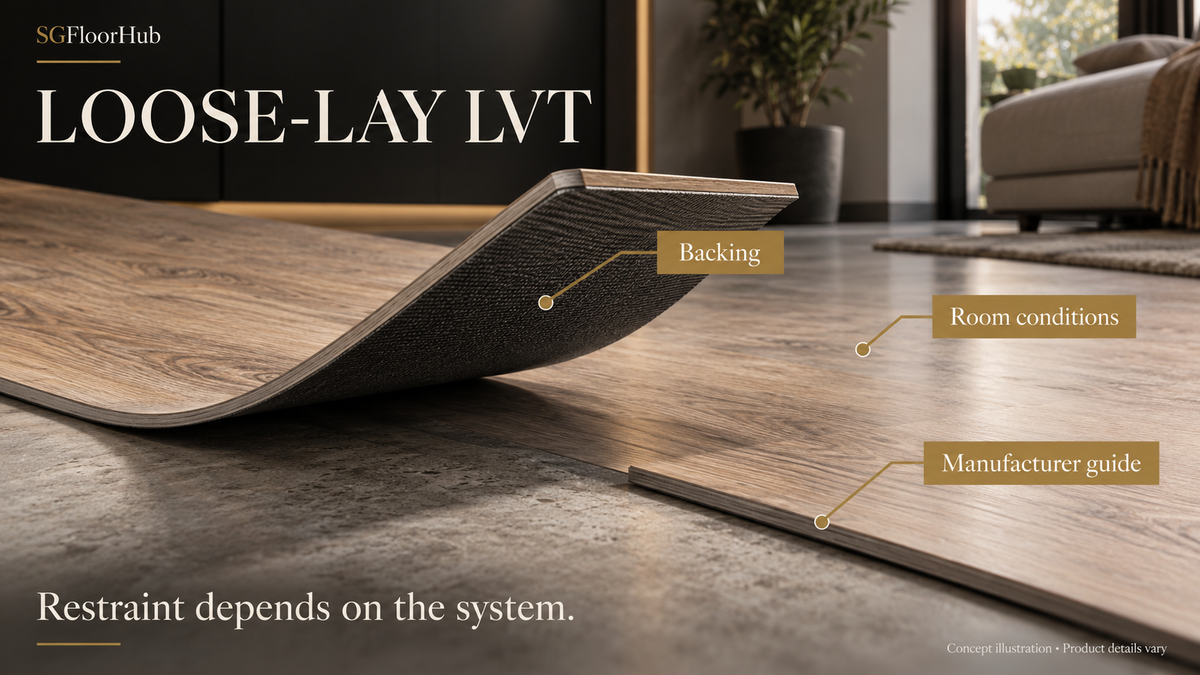
Loose-lay is a product system, not permission to place any vinyl plank without adhesive. Read the backing and restraint requirements together.
Quick answer
Loose-lay LVT uses a product-specific construction and backing to help resist movement. It is not the same as click flooring or a loose piece of ordinary dryback vinyl. Whether adhesive or additional restraint is required depends on the exact range, room conditions and current manufacturer instructions.

Separate the mechanism from the marketing shorthand
Loose-lay products can look similar to gluedown LVT from above. Their identity is found in the underside, the construction description and the permitted installation system. Karndean's US loose-lay page identifies its K-Wave friction-grip backing. That is a named manufacturer example, not a generic specification for all loose-lay products.
“No full-spread adhesive” and “no adhesive anywhere” are different statements. A short description on a display board may omit conditions covered in the installation guide. Ask for the current guide before accepting an adhesive-free description in the quotation.
Read a loose-lay product as a complete system
| Part of the description | Question to resolve |
|---|---|
| Product format | Is this the manufacturer's loose-lay version of the design? |
| Underside | What backing or other restraint mechanism is specified? |
| Room conditions | Which size, temperature and use conditions alter the method? |
| Adhesive | Is it absent, localised or required over the full area in this situation? |
| Substrate | Which surface and preparation requirements apply? |
Do not use the weight of a sample as a substitute for these answers. Weight may contribute to how a particular system behaves, but lifting a plank cannot establish the permitted room size or resistance to a moving load. Similarly, a rubber-like underside is not enough to identify a proprietary backing.
Example: a temporary room with a permanent-use assumption
Consider a fictional office proposal that calls loose-lay “easy to remove” and therefore assumes no adhesive is needed. The room contains wheeled chairs and receives concentrated sunlight. Those conditions should be checked against the selected product's guide; this example does not determine the required method.
The useful approval note identifies the product, the actual room and the restraint instruction that applies. If adhesive is required, keep it in the described system. Do not promise that future removal will leave the substrate unmarked or that every plank will remain reusable. Removability is a separate question from freedom from preparation and adhesive.
What to ask the supplier in Singapore
Request a labelled sample showing the original underside and a document naming the same format. Ask the supplier to mark which guide section applies to the proposed room and to state any exception in writing. A generic guide for a different collection is not adequate evidence.
The initial product brief should identify the system; substrate preparation and installation sequencing belong in the installer’s method statement. Keep those responsibilities visible. This avoids rejecting a suitable loose-lay product because of an oversimplified label, or choosing it on the mistaken expectation that its backing removes every site requirement.
Frequently asked questions
Can ordinary dryback LVT be used as loose-lay?
Do not assume so. Use only the installation system authorised for the exact product.
Is loose-lay the same as floating click vinyl?
No. Click products use mating edge profiles; loose-lay products rely on their specified construction and restraint system.
Sources and scope
Sources checked 15 October 2026. Manufacturer examples describe the named range and market; they do not confirm Singapore stock, local certification or approval for a particular project. Selection exercises and diagrams are original SGFloorHub editorial illustrations, not product tests or completed installations.
Continue reading
Written by SGFloorHub Editorial. Reviewed for scope, source attribution and product identification on 15 October 2026.
Independent editorial guidance. Check the current documents for the exact product and project.
Editorial standardsSuggest a correctionCONTINUE READING
More from this subject.

Vinyl Flooring
Large-Format LVT: Specify the Module Before the Look
Large-format describes proportion, not a performance grade. Define the actual module and review how it meets the room edges and fixed features.
Read article Large-Format LVT: Specify the Module Before the Look
Vinyl Flooring
LVT Grout Effects: Printed Lines, Bevels or Separate Strips?
A grout effect may be printed, formed at the edge or made with a separate strip. Identify the detail before choosing the tile and layout.
Read article LVT Grout Effects: Printed Lines, Bevels or Separate Strips?
Vinyl Flooring
Vinyl Sheet Roll Widths: Understanding Product Options
Roll width is a supplied-product dimension that needs a matching design and construction reference. Learn how to read a real width example, distinguish nominal format from a lay...
Read article Vinyl Sheet Roll Widths: Understanding Product Options